Advances in dental materials, laboratory techniques, and clinical protocols have made modern dentures more comfortable and natural-looking than ever. While dental implants and fixed bridgework are excellent choices for many patients, removable dentures remain a reliable and versatile way to restore a complete, confident smile.
At the office of Premier Dentistry, we use contemporary fabrication methods and carefully selected materials to create dentures that fit well and complement each patient’s facial features. Our goal is to provide prosthetics that not only restore chewing and speech but also preserve facial contours and support long-term oral health.
We take a personalized approach, tailoring each denture plan to a patient’s oral condition, lifestyle, and expectations. Whether you need a partial, a complete denture, or a hybrid solution that works with existing natural teeth or implants, our team focuses on predictable outcomes and lasting comfort.
Tooth loss affects more than appearance. Many adults experience changes in speech, diet, and self-confidence after losing one or more teeth. Gaps can make it harder to pronounce certain sounds clearly and may limit the variety of foods someone is willing to eat, which can affect overall nutrition.
Beyond daily function, missing teeth can trigger a cascade of changes in the mouth. Neighboring teeth may drift into empty spaces, bite relationships can shift, and the lack of stimulation to the jawbone can contribute to gradual resorption of bone over time. These shifts can make future restorations more complicated if treatment is delayed.
A thoughtfully designed denture can address many of these concerns at once: restoring the ability to eat varied foods, stabilizing adjacent teeth in cases of partial tooth loss, and re-establishing the vertical support that maintains a natural facial profile. Early evaluation and treatment preserve options and make outcomes more predictable.
Dentures are custom-made, removable prostheses composed of artificial teeth set in a supportive base that rests on the gums. The base is crafted to match the contours of the mouth and to distribute chewing forces evenly. Modern denture teeth and base materials are chosen for durability and a lifelike appearance.
Unlike permanent solutions such as some implant restorations or fixed bridgework, removable dentures can be taken out for cleaning and overnight soaking. This removability makes it easier to maintain the health of the underlying tissues and any remaining natural teeth.
Dentures can be broadly classified as either partial or complete. Partial dentures fill in gaps when several natural teeth remain, while complete dentures replace an entire arch. Within those categories there are variations—some rely on tissue support alone, while others incorporate attachments or implants for improved retention and stability.
Choosing the appropriate denture begins with a comprehensive evaluation of oral health, remaining teeth, and bone support. Our team reviews medical and dental history, performs an intraoral exam, and may use diagnostic imaging to understand bone contours and tooth positions. From there we outline options that meet both functional and aesthetic goals.
Partial solutions are typically recommended when healthy teeth remain that can serve as reliable anchors. These removable partial dentures use clasps or precision attachments to stabilize the prosthesis and to prevent unwanted movement of adjacent teeth. They can be constructed from a variety of frameworks depending on strength and visual preferences.
Complete dentures replace all teeth in an arch and come in several forms to meet different needs and timelines. Some are made after tissues have healed following extractions; others are designed for immediate placement so a patient never has to be without teeth. In many cases, specialized attachments or implants can be used to improve fit and reduce movement during function.
When all teeth in an arch are missing or require removal, a complete denture becomes the restorative option. Complete dentures are designed to restore bite height, lip support, and overall facial balance. Proper planning and anatomical assessment are essential for a comfortable long-term fit.
Conventional full dentures are fabricated after all extractions and once tissues have healed sufficiently. This approach allows the dental laboratory to capture the healed tissue contours, often resulting in a more stable and predictable fit without the need for early adjustments related to tissue shrinkage.
Immediate dentures
Immediate dentures are made in advance and placed at the same appointment as extractions so patients leave with teeth in place. They offer immediate aesthetics and function, though they commonly require relines or adjustments as the mouth heals and tissues remodel.
Overdentures
An overdenture gains retention and support by fitting over prepared natural tooth roots or specially placed attachments. Preserving select teeth beneath an overdenture can help maintain bone volume and provide tactile feedback that improves chewing efficiency.
Implant-supported dentures
Implant-supported dentures secure to dental implants anchored in the jaw, offering marked improvements in stability and comfort. By attaching to implants, these dentures resist displacement and provide a stronger foundation for chewing while reducing reliance on adhesives.
When enough sound natural teeth remain, a removable partial denture can restore missing teeth while preserving existing tooth structure. Partial dentures are designed to integrate with the remaining dentition, filling gaps and helping to maintain proper alignment and bite relationships.
Frameworks for partial dentures vary from cast metal designs to flexible resin and hybrid materials. Each option has trade-offs in rigidity, esthetics, and ease of repair. During planning, we consider the number of teeth being replaced, the health of abutment teeth, and the patient’s preferences to select the best material and design.
Our restorative plans emphasize long-term maintenance. A well-designed partial not only replaces missing teeth but also helps prevent the drifting and tilting of adjacent teeth that can complicate future treatment.
Our team is committed to producing durable, well-fitting prostheses. Whether you need a partial or a complete denture, we combine careful diagnosis, precise impressions, and meticulous laboratory communication to deliver a prosthesis that balances comfort, function, and natural appearance.
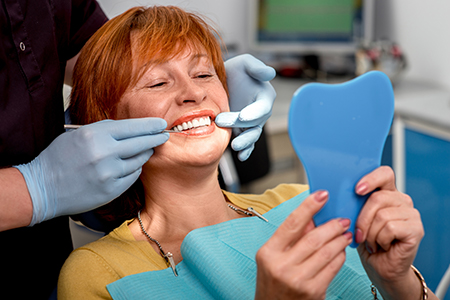
Successful denture care depends on a methodical process. After reviewing your health history and oral condition, we take detailed impressions, record bite relationships, and work with the dental laboratory on tooth selection and shade. Throughout this process we focus on both comfort and facial harmony.
Advanced diagnostics, including digital imaging when appropriate, help us assess bone contours and soft-tissue anatomy so the finished denture will sit securely and support natural function. If any preparatory work is needed, such as extraction or minor tissue reshaping, we’ll outline these steps in a clear treatment plan.
Fitting a denture often involves multiple appointments: try-ins to verify tooth position, shade, and bite; adjustments to refine fit; and final delivery with personalized care instructions. When implants or attachments are part of the plan, timing and coordination with specialized procedures are incorporated to ensure predictable results.
Good communication between our clinicians, the patient, and the dental laboratory is key. We take time to explain each stage so you know what to expect and how to care for your new prosthesis from day one.
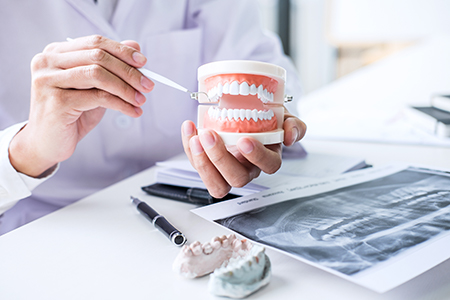
Receiving a new denture is a significant change, and patients can expect an adjustment period. Minor sore spots and speech changes are common at first and usually resolve as the muscles of the lips, cheeks, and tongue adapt. We schedule follow-up visits to fine-tune the fit and address any discomfort.
Getting comfortable with your denture
Allow a few days to a few weeks to feel fully comfortable. If an area becomes sore, wearing the denture briefly before a follow-up allows us to identify pressure points precisely so we can make targeted adjustments.
Temporary increase in saliva
A new prosthesis can stimulate salivary flow initially. This reaction is normal and typically subsides as your mouth acclimates to the appliance.
Speaking and enunciation
Practicing speech—reading aloud or conversing more—helps speed adaptation. With a few days of practice, most people regain clear, confident speech.
Eating with your denture
Start with softer foods and cut items into smaller pieces. Chew slowly and use both sides of the mouth to distribute pressure. As you grow more comfortable, you can gradually reintroduce firmer foods.
Denture hygiene
Rinse your denture after meals and brush it daily with a brush designed for dentures. Soak overnight in water or a recommended denture cleanser to keep the prosthesis clean and prevent staining.
Continue to clean any remaining natural teeth and gently massage gums to maintain tissue health. For upper dentures, gently clean the palate as part of routine care.
Remove dentures at night. Allowing the gums to rest helps reduce the risk of irritation and supports overall oral health.
Improving retention if needed
Some dentures benefit from additional retention measures. Adhesives can help in some cases, while implant-supported or attachment-style dentures offer a higher level of stability when clinically appropriate.
Follow-up and maintenance
Regular dental evaluations let us check how the denture fits and assess the health of any remaining teeth and oral tissues. Over time, relines or adjustments may be necessary to accommodate natural changes in the mouth.
Relines and repairs
As the jaw and soft tissues remodel, relines restore the denture’s intimate contact with the gums. Repairs and adjustments are often straightforward when performed promptly, so it’s best to address concerns early.

Restoring missing teeth with a well-designed denture is about more than filling gaps—it’s about improving comfort, function, and confidence. Our approach balances clinical expertise with practical solutions that align with each patient’s goals and daily routine.
Whether you are exploring partial options to preserve remaining teeth, considering immediate replacement after extractions, or evaluating implant-supported retention, our team helps you understand the advantages and limitations of each pathway so you can make informed decisions.
If you’d like to learn more about denture options or schedule an evaluation, please contact our office for additional information. Our team is available to answer questions and guide you through the next steps in restoring your smile.
Dentures are custom-made removable prostheses that replace missing teeth and the surrounding gum tissue. They consist of artificial teeth set in a supportive base that is shaped to fit the contours of your mouth and distribute chewing forces evenly. Modern materials provide a natural appearance while balancing durability and comfort.
Removable dentures sit on the gums and rely on tissue contours, suction, attachments, or implants for retention. Because they can be removed for cleaning, dentures make it easier to maintain the health of underlying tissues and any remaining natural teeth. Proper design and fit restore chewing function, support speech, and help preserve facial contours.
Good candidates for dentures include adults who are missing multiple teeth or an entire arch and those whose remaining teeth are not restorable. Candidates should be in overall good health and able to participate in the treatment process, which may include impressions, try-ins, and follow-up visits. Bone volume and the condition of remaining teeth influence which denture options are appropriate.
A comprehensive evaluation that reviews your medical and dental history, performs an intraoral exam, and uses diagnostic imaging helps determine suitability. In some cases, alternatives such as fixed bridges or implant-supported restorations may be considered alongside or instead of removable dentures. The goal is to match a predictable, comfortable solution to your functional and aesthetic needs.
Dentures can be broadly categorized as partial or complete, with additional variations like immediate, conventional, overdenture, and implant-supported designs. Partial dentures replace several missing teeth while preserving sound natural teeth, and complete dentures replace all teeth in an arch. Immediate dentures are placed at the time of extraction, while conventional dentures are made after tissues have healed.
Overdentures fit over prepared tooth roots or attachments to improve retention and help maintain bone, and implant-supported dentures attach to dental implants for enhanced stability. Frameworks for partials range from cast metal to flexible resin, each with trade-offs in strength, appearance, and repairability. Your clinician will recommend the best type based on oral health, anatomy, and lifestyle goals.
At the office of Premier Dentistry we begin with a thorough evaluation that includes detailed impressions, bite records, and tooth selection for shade and shape. Digital imaging and diagnostic tools may be used to assess bone contours and soft tissue so the prosthesis supports natural facial balance and function. Clear communication with the dental laboratory ensures each denture is crafted to the prescribed specifications.
The fabrication process typically includes try-in appointments to verify tooth position, shade, and bite relationship followed by adjustments to refine fit and comfort. When implants or attachments are part of the plan, timing and coordination with surgical procedures are incorporated into your treatment schedule. We provide step-by-step guidance so patients understand what to expect from evaluation through final delivery.
Implant-supported dentures secure to dental implants anchored in the jaw, providing greater retention and stability than tissue-supported prostheses. These restorations reduce movement during chewing and speaking and often improve patient comfort and confidence. They can be designed as removable or fixed prostheses depending on the clinical plan.
Implant-supported options are recommended when patients seek improved function, when bone volume allows implant placement, or when conventional dentures lack satisfactory retention. Planning includes imaging to evaluate bone and soft tissues, and coordination with surgical placement and restorative phases to achieve predictable results. In many cases, implants also help preserve jawbone and maintain facial support over time.
Daily care is essential for the longevity of your denture and the health of oral tissues. Rinse dentures after meals to remove debris, brush them daily with a brush designed for dentures, and soak them overnight in water or a recommended denture cleanser to prevent staining and bacterial buildup. Avoid abrasive cleaners and hot water, which can damage denture materials.
Continue to clean any remaining natural teeth and gently massage gums to maintain tissue health and circulation. Remove dentures at night to allow the gums to rest and to reduce irritation. Regular dental visits let your clinician assess fit, check oral tissues, and address any adjustments or repairs promptly.
Adjustment to new dentures varies, but many patients notice improvements in comfort and function within a few days to a few weeks. Initial reactions commonly include increased saliva production, mild soreness in pressure areas, and temporary changes in speech. These responses typically diminish as the muscles of the lips, cheeks, and tongue adapt to the appliance.
Practicing speech by reading aloud and starting with softer foods cut into small pieces speeds adaptation to eating and speaking. If sore spots develop, brief wear followed by a follow-up visit helps the clinician identify pressure points and make targeted adjustments. Consistent follow-up care ensures a smoother transition and long-term comfort.
Common issues with dentures include sore spots, looseness, difficulty chewing, and changes in fit due to tissue remodeling. Minor sore areas are often resolved with targeted adjustments, while looseness can be addressed with relines, rebasing, or improvements to retention such as attachments or implants. Prompt attention to discomfort helps avoid larger problems and maintains tissue health.
Breakage or tooth wear are other concerns that require professional repair to restore function and appearance. Regular assessments allow the dental team to recommend appropriate maintenance or restorative upgrades before problems interfere with daily life. If a repair is needed, bring the denture to the office rather than attempting a home fix, as professional repair preserves fit and alignment.
Dentures and the tissues that support them benefit from ongoing professional monitoring to ensure a proper fit and oral health. Periodic dental evaluations let clinicians assess tissue changes, check for wear or damage, and perform relines or adjustments when necessary. These visits also give the team a chance to review hygiene practices and examine any remaining natural teeth or implant sites.
Maintenance intervals vary depending on individual circumstances, but timely follow-up when issues arise prevents complications and extends prosthesis longevity. Professional cleaning of the mouth and assessment of denture condition are part of comprehensive care. If changes in fit or comfort occur, schedule an appointment to address them before they worsen.
Well-designed dentures restore vertical dimension and lip support, which can improve facial proportions and provide a more natural appearance. By replacing missing teeth and re-establishing proper bite relationships, dentures help maintain facial contours that might otherwise collapse over time. This restoration of support often enhances a patient’s comfort and self-image.
Functionally, dentures enable a broader, more varied diet by improving chewing efficiency for many foods. With appropriate guidance on adaptation and food choices, patients can regain the ability to eat nutritiously and speak clearly. Ongoing care and adjustments ensure dentures continue to support both appearance and dietary needs.